
API3 is rapidly gaining attention within the decentralized finance (DeFi) landscape, not only for its underlying utility but also due to growing curiosity around the API3 price and its market performance. Positioned at the intersection of data accessibility and blockchain transparency, API3 addresses a longstanding challenge: delivering secure, reliable real-world data to smart contracts without undue centralization risk.
Unlike traditional data oracles—platforms that connect off-chain and on-chain environments—API3 champions first-party oracles. This means API providers themselves feed data directly onto blockchains, eliminating the need for middlemen and reducing room for manipulation or error. This technical architecture not only streamlines data delivery but also forms the bedrock of API3’s unique value proposition.
API3 Token Price: Live Value, Chart Trends, and Influencing Factors
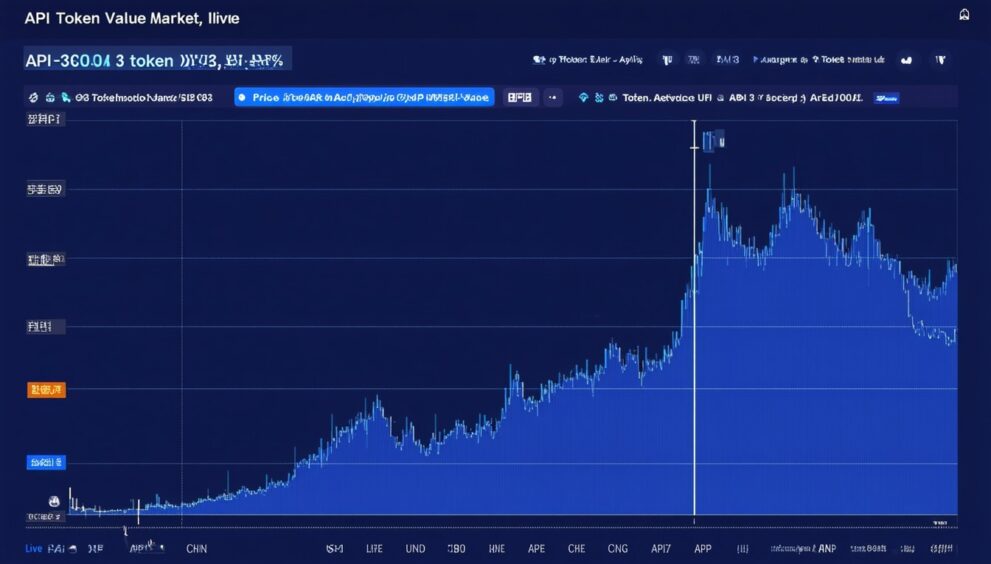
The live API3 token price is a focal point for investors seeking exposure to emerging DeFi infrastructure projects. Anyone considering API3 should observe both short- and long-term patterns using reputable market charts, which typically detail price history, 24-hour trading volumes, circulating supply, and market capitalization.
Recent history has shown API3 price volatility in line with broader crypto trends, sometimes experiencing double-digit price swings within just a few days. API3 is traded on major platforms such as Binance and Coinbase, making its price subject to usual liquidity and sentiment shifts:
- Market Sentiment: Like most cryptocurrencies, general mood across the sector—whether bullish or bearish—impacts API3 valuation.
- Integration Announcements: Collaborations with DeFi platforms or mainstream adoption can result in short-term price rallies.
- Governance and Staking News: Decisions or upgrades affecting API3’s staking rewards and governance features often influence price direction.
- Regulatory Developments: Broader legal clarity or restrictions around oracles and DeFi can affect investor interest and token flow.
Examining multi-timeframe price charts gives a more nuanced understanding of support and resistance levels, while volume spikes may hint at institutional involvement or whale trades.
Key Drivers Behind API3’s Market Performance
API3’s market trajectory isn’t shaped solely by technical crypto cycles; its underlying utility and adoption scenario are equally critical. The token (API3) powers a decentralized autonomous organization (DAO) responsible for network governance and incentivizing participants who run oracle nodes.
Notable Industry Developments
In the last eighteen months, more DeFi projects have begun integrating API3-powered oracles, attracted by a self-custodial design and transparency. The ability for API providers to run their own “Airnode” hardware has been cited as a distinguishing feature—granting data providers direct, auditable roles in Web3 ecosystems.
The narrative aligns with a wider DeFi trend: minimizing trusted intermediaries to maximize transparency across chain-to-real-world interactions.
“API3’s direct oracle model is a step forward for data integrity in DeFi, reducing the attack surface that comes with third-party intermediaries,” says blockchain security consultant Ava Nicholas.
Risks and Volatility
Despite its strengths, API3 remains subject to the familiar volatility that defines digital asset markets. Events like high-profile bridge hacks or network outages in partnered protocols can trigger sudden drawdowns. Layered atop this are macroeconomic factors—such as changes in interest rates, inflation indicators, or global regulatory headlines—that continue to affect the entire crypto sector, API3 included.
API3 in DeFi: Real-World Use Cases and Adoption Scenarios
A key differentiator for API3 is its flexibility for both established enterprises and experimental DeFi startups. Several use cases have begun to crystallize, giving tangible illustration to the project’s aims:
- Decentralized Insurance: Applications like decentralized crop or flight insurance rely on trustworthy, real-world data to trigger payouts, which API3’s oracle infrastructure directly supports.
- Prediction Markets: Platforms requiring regular updates from sports, polling, or financial markets use API3’s oracle feeds for automated settlement.
- Stablecoins and Synthetic Assets: Collateralized stablecoins and tokenized assets depend on robust price feeds to maintain pegs or manage volatility.
For instance, several prediction market dApps have publicly integrated API3’s oracle network, citing increased data transparency and reduced latency compared to legacy solutions.
Charting API3’s Future: Roadmap, Upgrades, and Community Participation
Looking forward, the API3 DAO continues to push technical and governance upgrades aimed at increasing both network reliability and token utility. The introduction of staking, where participants can lock API3 tokens in return for protocol rewards and voting power, has created an additional layer of engagement.
Upcoming advances highlighted in recent community calls include:
- Expansion to additional blockchains, improving cross-chain data availability.
- Developer incentives to foster more dApp integrations.
- Enhanced on-chain governance, increasing community say in protocol evolution.
By focusing on both infrastructure reliability and ongoing innovation, the API3 ecosystem aims to position itself as a foundational DeFi data layer.
Comparing API3 to Competing Oracle Solutions
Understanding API3’s position requires context within the broader data oracle space—where projects like Chainlink and Band Protocol are also prominent.
- Chainlink: The leading oracle by market capitalization, Chainlink relies on a decentralized network of node operators. Its robust ecosystem and network effect make it a formidable presence.
- Band Protocol: Noted for its focus on cross-chain compatibility and speed, Band offers flexible oracle solutions for various blockchains.
API3’s focus on first-party data providers as node operators, rather than third-party nodes, marks a fundamental divergence in trust design and accountability—arguably making it more attractive to enterprises and regulators seeking greater auditability.
Conclusion: Navigating API3’s Price and Ecosystem Growth
API3 continues to carve out a meaningful role within the expanding DeFi and oracle sector. Its market price reflects not just sector sentiment but underlying fundamentals—the integrity of first-party data models, community governance, and real-world adoption. While volatility will remain a fixture for digital assets, API3’s distinctive approach and growing use cases suggest it will remain a key name to track for investors and developers alike.
FAQs
What determines the API3 price?
API3 price is determined by supply and demand on global crypto exchanges, influenced by broader market sentiment, integration announcements, and the overall health of the DeFi sector.
How is API3 different from other oracle tokens like Chainlink?
API3 uses first-party oracle nodes operated by direct data providers, offering less reliance on intermediaries and more transparency, while solutions like Chainlink use a network of independent node operators.
Can API3 be staked, and if so, how does staking affect its price?
Yes, API3 can be staked, which encourages long-term holding and reduces circulating supply, potentially minimizing sell-side pressure and contributing to price stability or appreciation.
Which industries currently use API3’s oracle services?
API3 oracles are used in industries like decentralized finance, insurance, prediction markets, and the creation of synthetic assets or stablecoins requiring reliable, on-chain price data.
Where can I find live API3 price charts and analysis?
Live API3 price charts and historical analysis are available on leading financial data sites such as CoinMarketCap, CoinGecko, and major crypto exchange dashboards.