
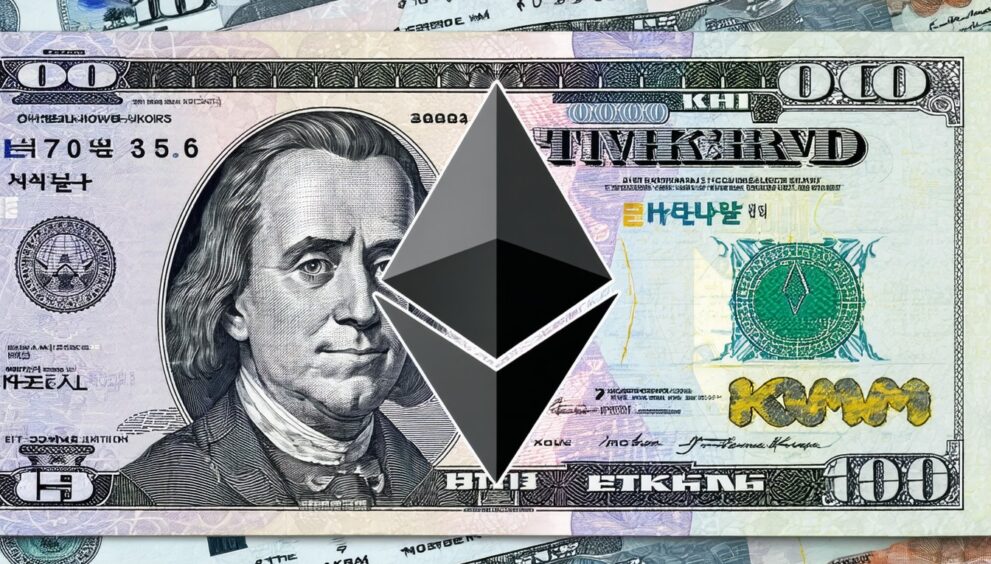
Get the latest insights on the ETH KRW price, live Ethereum to Korean Won exchange rates, key market influences, and what shapes Ethereum’s role in South Korea’s crypto economy. Discover trends, expert analysis, and practical answers to common questions.
Understanding the ETH KRW Price: Key Dynamics and Live Exchange Rates
Ethereum (ETH), as the world’s second-largest cryptocurrency, remains a cornerstone for global digital asset markets. In South Korea, where cryptocurrency trading intensity routinely places the country among the world’s most active, the ETH KRW price—reflecting Ethereum’s value in Korean Won—serves as a vital barometer for traders, investors, and businesses alike.
As digital assets gain further traction within the Korean financial landscape, understanding the nuances of ETH to KRW pricing provides deeper insight into broader trends influencing both local and international markets.
What Drives the ETH KRW Exchange Rate?
Ethereum’s price in Korean Won fluctuates based on a continuous interplay of domestic and global factors. Foremost among these influences are:
- Global ETH/USD price movements: ETH’s global benchmark remains the US dollar. Korea’s ETH/KRW rate is a function of both ETH’s USD price and the current USD/KRW foreign exchange rate.
- South Korean demand and trading volumes: Korean exchanges, such as Upbit, Bithumb, and Coinone, often report some of the world’s highest Ethereum trading volumes, occasionally causing local premiums—known as the “Kimchi Premium”—whereby ETH trades in Korea at prices above the global average.
- Regulatory landscape: Regulatory news, from tax policy updates to potential exchange license changes, can rapidly impact local appetite for ETH.
- Macroeconomic conditions and monetary policy: Shifts in the Won’s strength, interest rates, and inflation all influence cryptocurrency demand as Koreans hedge or diversify their holdings.
The Kimchi Premium: A Unique Phenomenon
During periods of heightened global interest, the price of Ethereum in KRW occasionally surges above its US dollar equivalent. This disparity, dubbed the “Kimchi Premium,” is fueled by capital controls, frictions in cross-border arbitrage, and intense local trading activity. Analysts note that variations of 5-10% above global prices are not uncommon during speculative cycles.
“The Kimchi Premium reflects just how intensely South Koreans participate in crypto markets,” notes Ji-Hoon Kim, a Seoul-based digital asset strategist. “It’s a product of both macroeconomic factors and localized trading psychology.”
Live ETH KRW Price Trends: Tools and Platforms
Staying up to date with the live ETH to KRW rate is critical for traders and investors. Several platforms offer real-time data, including:
- Leading Korean exchanges: Upbit, Bithumb, and Coinone provide live ETH/KRW quotes, order books, and immediate trading access.
- Global data aggregators: CoinMarketCap, CoinGecko, and TradingView display consolidated price feeds and charting tools, often including Korean markets.
- Mobile apps and widgets: Popular Korean finance apps seamlessly integrate live crypto prices alongside traditional financial data.
Key Metrics to Monitor
For those analyzing or trading ETH KRW price, several indicators can enhance decision-making:
- Order book depth: Reveals market liquidity and potential for price swings.
- Volume spikes: Identify emerging trends or the influence of major news.
- On-chain data: Tracks ETH inflow and outflow to Korean exchanges, sometimes signaling broader market sentiment.
Ethereum’s Role in the South Korean Crypto Economy
South Korea’s status as a cryptocurrency hub is evident not only in trading volumes but in its vibrantly innovative tech ecosystem. Ethereum holds a particular resonance here for several reasons:
- DeFi and NFT popularity: Many of Korea’s decentralized finance (DeFi) projects and NFT initiatives are built on Ethereum’s blockchain.
- Blockchain startup culture: Seoul is home to dozens of blockchain-focused startups, leveraging Ethereum for everything from logistics to digital identity solutions.
- Retail investor activity: A significant proportion of young Korean investors favor ETH as a core crypto holding alongside Bitcoin.
Regulatory Developments and Market Maturity
Recent years have seen South Korea implement comprehensive regulation around crypto exchanges, tax reporting, and anti-money laundering (AML) practices. This has shaped the environment for ETH/KRW pricing in several ways:
- Exchange compliance: Only registered exchanges can offer fiat/KRW trading, concentrating liquidity among a few large platforms.
- Investor protection and transparency: Stronger disclosure and KYC rules have improved trust in local markets, positioning Korea as a compliant crypto jurisdiction.
Real-World Scenarios: ETH KRW Price in Action
To illustrate the practical dimensions of ETH KRW pricing, consider these examples:
- Arbitrage trading: During wide Kimchi Premium phases, sophisticated traders find regulated ways to buy ETH abroad and sell on Korean exchanges, seeking risk-managed profit—but face capital mobility constraints.
- Corporate blockchain pilots: Korean electronics and automotive companies increasingly use Ethereum-based solutions for cross-border payments, supply chain auditing, and tokenized assets, resulting in real-time demand for ETH and stable exchange rates.
- Tax-related buying or selling: Ahead of regulatory deadlines, sudden surges in ETH/KRW trading volumes often reflect investors seeking favorable entries or exits in anticipation of tax policy changes.
“Market liquidity, clear regulations, and a culture of innovation have allowed Korea to shape global crypto price trends—ETH in KRW is a prime example,” comments crypto market researcher Eunji Seo.
Conclusion: Key Takeaways for Navigating the ETH KRW Price
The ETH KRW price acts as a fast-moving indicator of both Ethereum’s fortunes and South Korea’s unique position in global crypto. From the influence of global ETH prices and local demand surges to regulatory cycles and innovation, multiple forces interplay to shape the ETH/KRW exchange rate. For traders and investors, monitoring reliable live sources and understanding local market context is essential to informed decision-making.
FAQs
What is the ETH KRW price, and why does it matter?
The ETH KRW price represents the value of Ethereum measured in South Korean Won. It’s crucial for Korean crypto traders and investors, as well as anyone comparing ETH prices globally.
Why do Ethereum prices in Korea sometimes differ from global averages?
South Korea’s demand, capital controls, and intense trading can cause local premiums on ETH prices—a phenomenon known as the Kimchi Premium—especially during periods of high global volatility.
Where can I check the live ETH to KRW exchange rate?
Major Korean exchanges like Upbit and Bithumb display real-time prices in KRW, while international platforms such as CoinMarketCap and TradingView also provide up-to-date ETH/KRW data.
Does regulation affect the ETH KRW price?
Regulatory changes, such as tax rules or exchange registration, can impact trading volumes and sentiment, sometimes leading to price fluctuations on Korean platforms.
What role does Ethereum play in Korea’s tech scene?
Ethereum is foundational for numerous Korean DeFi, NFT, and enterprise blockchain projects, contributing to the country’s innovation and sustaining strong demand for ETH.
Is arbitrage trading possible with ETH/KRW?
While arbitrage opportunities arise during significant price gaps, moving funds across borders can be legally complex and subject to Korean financial regulations. Always research compliance requirements before attempting such strategies.