
In the fast-evolving world of digital assets, Songbird (SGB) stands out as the canary network for Flare, offering an experimental playground for decentralized apps and protocols. As the price of SGB continues to fluctuate, traders, investors, and blockchain enthusiasts are increasingly eager to understand its underlying market dynamics. Real-time SGB price tracking, historical chart analysis, and thoughtful market insights have become essential resources for those navigating the ever-volatile cryptocurrency landscape. Behind every price tick is a composite of market sentiment, technological updates, and broader shifts within the blockchain ecosystem.
What Determines the Songbird (SGB) Price?
Several factors converge to shape the current and future price of SGB. Unlike traditional equities, the value of digital tokens like Songbird is influenced by a blend of market forces, network developments, and macroeconomic indicators.
Market Supply and Demand
The basic economic principle of supply and demand plays a decisive role in the formation of SGB’s price. The total circulation of SGB tokens is capped, with new tokens released under controlled scenarios. High-profile network announcements or partnership integrations often cause sudden spikes in demand, while prolonged periods of inactivity or negative sentiment can dampen enthusiasm.
“Market price discovery in emerging assets like Songbird is particularly sensitive to network milestones, ecosystem adoption, and perceived utility,” notes Olivia Marshall, a digital assets strategist.
Ecosystem Growth and Technical Upgrades
The growth of the Songbird ecosystem and its alignment with Flare’s broader ambitions also move the needle for SGB valuation. Notably, as developers deploy dApps or test smart contracts on Songbird before Flare’s mainnet implementation, successful network tests can trigger bullish sentiment.
Network performance upgrades, security patches, or integration with DeFi protocols may encourage liquidity and bring in new participants. Conversely, security breaches can drive prices down as investor confidence takes hits. The broader crypto market trends—such as Bitcoin’s overall trajectory—also subtly shape SGB’s momentum.
Live SGB Price Charts: Decoding Trends and Patterns
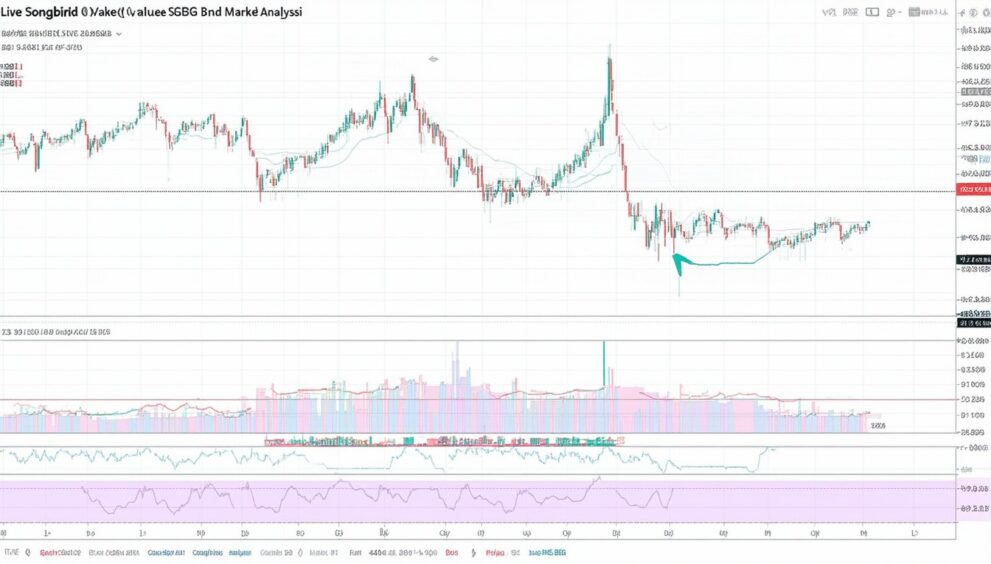
For active traders and analysts, real-time access to SGB price charts is indispensable. Platforms like CoinGecko, CoinMarketCap, and decentralized exchanges provide continuously updating price feeds, historical data snapshots, and technical overlays such as moving averages.
Reading the SGB Chart
Three primary metrics are typically assessed when reviewing a Songbird chart:
- Price Action: Shows historical ranges and volatility, helping traders spot breakouts or consolidations.
- Volume Data: Analyzes the number of SGB tokens traded over particular intervals, offering clues about the strength behind price moves.
- Technical Indicators: Tools like RSI (Relative Strength Index) and MACD (Moving Average Convergence Divergence) are applied to forecast potential reversals or continuations.
Short Case Study: SGB’s Performance During a Major Flare Update
Following the announcement of a significant Flare protocol update, SGB experienced a rapid price uptick, accompanied by a notable surge in trading volume. Social sentiment data from crypto analytics firms showed a double-digit increase in keyword mentions, reflecting the market’s anticipation of real-world utility.
SGB Market Analysis: Beyond the Headline Price
Understanding the Songbird price requires a lens that zooms out from 24-hour fluctuations and examines broader market health. Market capitalization, liquidity depth, and trading pair diversity provide essential context.
Comparing SGB to Peer Tokens
Against similar testnets or “canary” networks like Kusama (KSM) for Polkadot or Ropsten for Ethereum, SGB’s price trajectory often mirrors broader cycles of technological experimentation. Unlike mainnets, these networks carry both higher risk and potentially outsized reward, often attracting developers and speculators alike.
Factors Influencing Songbird’s Liquidity
- Exchange Listings: Listings on major centralized and decentralized exchanges enhance liquidity and elevate price discovery.
- Staking and Yield Programs: Higher yields can attract long-term holders, reducing circulating supply and influencing short-term price swings.
- Investor Behavior: Whales—large holders moving vast quantities—can occasionally create sharp, unpredictable volatility.
“Active canary networks are vital for innovation, but they also expose price to rapid swings as users test real-world scenarios before main network launches,” explains Raj Patel, a blockchain market analyst.
Risks and Opportunities in Trading SGB
Every emerging asset comes with its set of risks and opportunities. Traders interested in SGB need to weigh the promise of early adoption rights against the inherent volatility of test networks.
Volatility as a Double-Edged Sword
Volatility is magnified in the Songbird ecosystem. While sharp upward price moves can offer outsized gains, reversals are just as rapid. Historically, news-driven surges have been followed by corrections once initial enthusiasm wanes or as profit-taking begins.
Utility, Community, and Long-Term Prospects
While many traders focus on short-term movements, the underlying value of SGB may ultimately depend on how well Songbird succeeds as a platform for dApp development and experimentation. A vibrant developer community, strong governance participation, and clarity from the Flare Foundation can all tilt the long-term outlook.
Conclusion: Making Informed Decisions with SGB Price
Staying informed about Songbird’s live price is just the surface; understanding its value proposition, underlying technology, and market sentiment is crucial for both new and seasoned crypto market participants. Tools like real-time charts and fundamental market analysis offer a strategic edge in navigating SGB’s fluctuations. As Songbird continues to serve as a proving ground for Flare Network innovations, its value will be tethered to both technical utility and market confidence. For those considering SGB, diligent research and risk awareness remain key.
FAQs
What is Songbird (SGB) and how is it used?
Songbird is the canary network for Flare, serving as a testing ground for new features, protocols, and dApps before mainnet deployment. It allows developers to experiment with real assets in a live environment.
Why does the SGB price fluctuate so much?
Songbird’s price is influenced by development updates, overall market sentiment, trading volume, and its unique position as a testnet token. Announcements of new features or ecosystem partnerships often prompt sharp movements.
Where can I view live Songbird (SGB) price charts?
Major cryptocurrency data aggregators like CoinGecko and CoinMarketCap provide real-time SGB price updates and historical charting tools. Some exchanges also offer advanced chart analysis directly on trading platforms.
Is trading Songbird (SGB) risky?
Yes, trading SGB involves heightened volatility and uncertainty common to testnets and emerging networks. It’s essential to use sound risk management strategies and only invest what you can afford to lose.
How does Songbird compare to networks like Kusama?
Songbird, like Kusama for Polkadot, acts as an experimental environment for its main network (Flare). Both attract developers looking to test innovations, but their prices and use cases are shaped by their specific parent ecosystems.
What could influence SGB’s long-term value?
The long-term value of SGB will likely depend on ongoing developer activity, successful implementation of innovative features, and its role in Flare’s broader ecosystem adoption. Community governance and consistent security practices will also be crucial factors.