

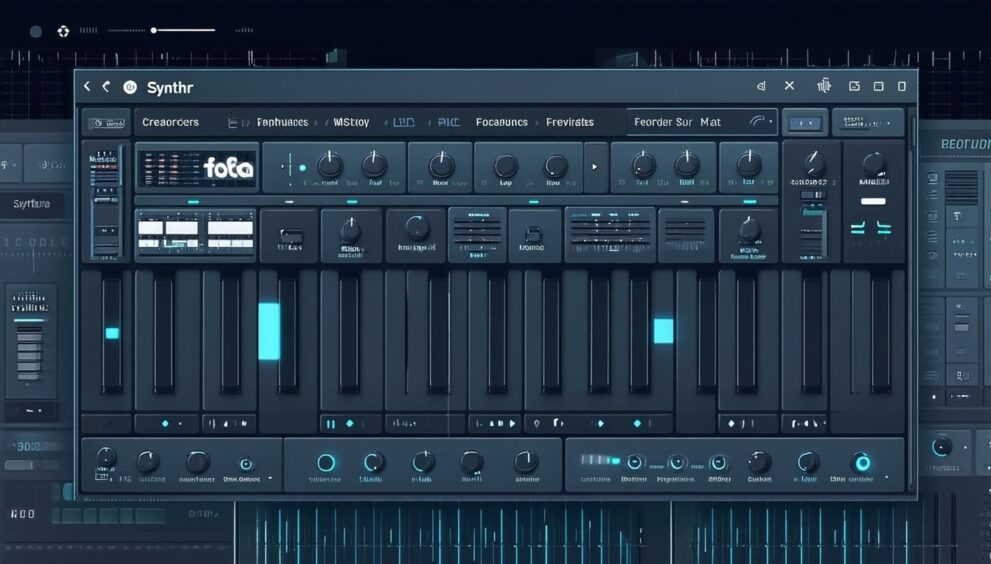
In recent years, artificial intelligence has disrupted the music industry in profound ways, from composition to mastering. Among a wave of innovative platforms, Synthr stands out as a frontrunner—melding advanced machine learning with intuitive sound design tools to reshape how creators and producers approach music generation. Musicians, sound designers, and content creators now have on-demand access to a level of creative assistance that once required a full production team. As technology redefines creative boundaries, understanding Synthr’s capabilities, unique advantages, and industry impact becomes essential for anyone navigating the new digital music landscape.
Understanding Synthr: Core Features and Capabilities
Synthr is designed as a comprehensive AI-driven music creation and sound design platform. It empowers users—professional producers, indie musicians, and even non-musicians—with tools for generating melodies, harmonies, beats, and bespoke soundscapes in minutes.
AI Music Generation: From Seed Idea to Full Track
At the heart of Synthr is its generative algorithm. Users can input a simple prompt—such as a genre, mood, or reference track—and Synthr’s engine produces fully fleshed-out compositions. The AI draws on a vast, legally licensed dataset of music styles and sound palettes. Parameters like tempo, instrumentation, and emotion can be finely tuned, enabling both rapid prototyping and detailed customization.
Advanced Sound Design for Modern Creators
Beyond pure song creation, Synthr’s modular sound design tools offer granular control over timbre, effects, and synthesis. This appeals to sound designers working in film, gaming, and advertising, where unique textures are in high demand. The platform’s interface simplifies once-arcane processes, allowing creators to manipulate waveforms or layer effects without deep technical knowledge.
“Synthr fundamentally changes who gets to participate in music creation. We’re seeing bedroom artists compete with studio pros, purely on creative vision—not just technical know-how.”
— Dr. Lena Ortiz, Music Technology Researcher
Integration, Automation, and Workflow Enhancements
Synthr doesn’t operate in isolation. Through robust API access and plugin compatibility, its ecosystem slots into established digital audio workstations (DAWs) like Ableton Live, Logic Pro, and FL Studio. This seamless integration streamlines workflows and reduces friction between ideation and execution—a crucial advantage in fast-paced content environments.
Synthr in Practice: Real-World Use Cases
The practical applications for Synthr cut across industries and creative disciplines, illustrating its broad appeal.
Empowering Independent Musicians
Indie artists with limited resources harness Synthr’s AI to experiment with genres, guiding their unique ideas into professional-quality tracks without expensive studio time. Several viral hits in recent years have credited AI-powered tools for their production, highlighting their democratizing impact.
Enhancing Film and Game Audio
In media production, Synthr accelerates scoring and sound design. For instance, video game studios use it to auto-generate looping ambient tracks or adaptive musical cues that respond to gameplay. Similarly, film editors harness its sound libraries for rapid mockups and even final mixes.
Supporting Content Creators and Podcasters
With the explosion of podcasts, YouTube, and TikTok, creators are in constant need of fresh, copyright-clear music. Synthr’s royalty-free generation and customization options allow for brand-safe, distinctive soundtracks in minutes—empowering creators to focus on their core message and audience engagement.
Technical Foundations: AI Models and Ethical Considerations
Synthr’s engine relies on neural networks trained on diverse datasets, balancing innovation with copyright compliance. Generative adversarial networks (GANs) and transformer-based architectures underpin its creativity, allowing not just reproduction but synthesis of wholly new sounds.
Data, Licensing, and Ownership
A crucial area for any AI-driven music tool is ethical data use. Synthr only incorporates music for which it holds clear rights, addressing the music industry’s concerns about unauthorized replication. Additionally, users retain commercial rights to AI-generated outputs, allowing for monetization across channels.
AI Transparency and Creative Attribution
Questions of creative ownership and human-AI collaboration persist. Synthr provides detailed metadata and usage logs for every track generated, helping users and industry stakeholders navigate attribution and originality. As regulations around AI content evolve, this attention to transparency positions Synthr as a responsible leader.
The Competitive Landscape: How Synthr Stacks Up
While AI music apps abound, Synthr claims a unique niche—prioritizing both creator empowerment and ethical design.
Differentiation vs. Other AI Platforms
Competitors such as Amper Music, AIVA, and Jukedeck offer generative capabilities. Synthr sets itself apart with:
- Deep DAW integration: Avoiding siloed workflows.
- Pro-level sound design tools: Beyond preset-based music, enabling truly custom sounds.
- Clear licensing and user rights: Reducing legal uncertainty for professionals.
Industry Trends and Adoption
Adoption of AI in music creation is accelerating rapidly. Surveys indicate that a growing share of professional producers have integrated at least one AI tool into their workflow. Major labels and independent collectives alike experiment with hybrid human-AI production, signaling that the technology is maturing beyond novelty.
Challenges and Future Directions
No tool is without challenges. Skeptics argue that AI could lead to creative homogenization or put traditional jobs at risk. Others point out that, while AI excels at pattern synthesis, the subtlety of human artistry remains irreplaceable.
Synthr’s roadmap addresses some of these issues by inviting community feedback, incorporating human-in-the-loop editing, and investing in models that prioritize novel, expressive outcomes over formulaic production. As generative AI expands, balancing scale with creativity and ethics will be central to future developments.
Conclusion: Synthr’s Place in the Evolving Music Ecosystem
Synthr exemplifies the promise and complexity of AI-powered music creation. By lowering technical barriers, it empowers a diverse, global community of creators—while offering professional integration, ethical safeguards, and creative flexibility. As the industry grapples with fundamental questions of authorship and innovation, Synthr stands as both tool and catalyst, shaping the next chapter in music technology.
FAQs
How does Synthr ensure music created on its platform is copyright compliant?
Synthr uses datasets for which it has secured legal rights and ensures that any AI-generated output is original, not a direct copy of existing tracks. Users are also granted commercial rights to their creations.
Who can benefit from using Synthr?
Synthr is designed for musicians, producers, sound designers, and content creators at any skill level. Its user-friendly tools make professional-quality music creation accessible to individuals and teams alike.
Can Synthr’s music be integrated into any digital audio workstation?
Yes, Synthr supports plugin integration and API access, allowing seamless use with major DAWs such as Ableton Live, Logic Pro, and FL Studio.
What makes Synthr different from other AI music platforms?
Synthr emphasizes deep DAW integration, powerful modular sound design tools, and a transparent approach to data licensing and user rights, setting it apart from many alternatives.
Does Synthr replace human musicians and composers?
While Synthr automates many aspects of music creation, it is intended to assist, not replace, human artistry. It serves as a creative partner, helping users develop, enhance, and realize their musical concepts.