
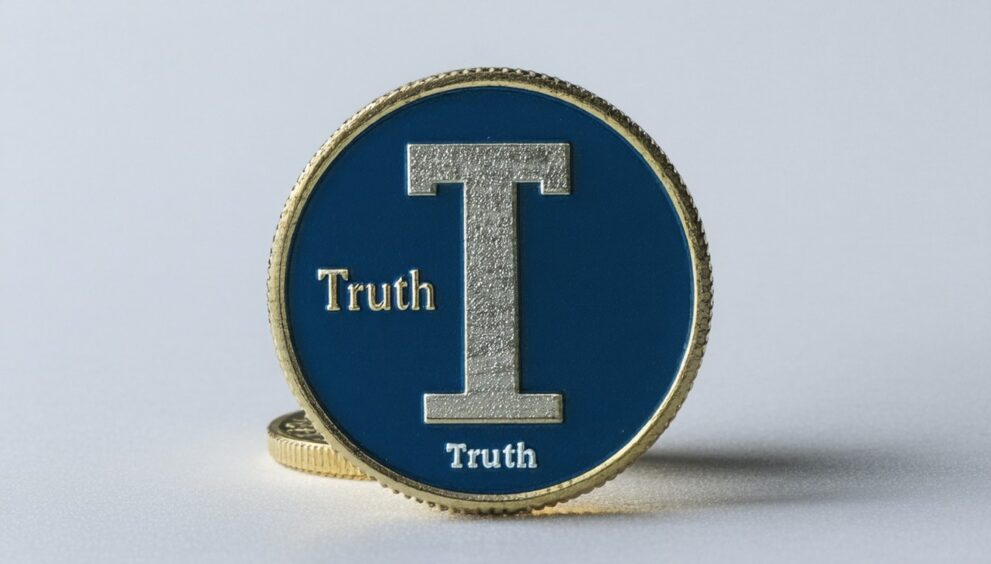
In the maze of thousands of cryptocurrencies, each one strives to stand out through innovation, utility, or robust communities. Truth Coin has recently emerged as a topic of conversation among crypto enthusiasts, investors, and those interested in decentralized governance. Fueled by its unique value proposition and momentum in certain digital asset circles, Truth Coin seeks to clarify the often-murky waters between truth-telling and trustlessness in decentralized finance (DeFi). Here’s a comprehensive look at what makes Truth Coin tick, its technology, potential implications, and what prospective users should keep in mind.
What Is Truth Coin?
Truth Coin is a digital token designed to incentivize honesty and veracity in decentralized prediction markets. Built on blockchain infrastructure, the project aims to reward participants for providing truthful, verifiable information on various real-world events. The foundational premise: people are more likely to act truthfully when their incentives align with accuracy, minimizing the “oracle problem” that plagues many smart contract platforms.
Unlike traditional tokens purely focused on financial value, Truth Coin aspires to underpin systems that need accurate reporting—ranging from prediction markets and reputation systems to the validation of data feeds for decentralized apps (dApps).
How Does Truth Coin Work?
The Smart Contract Mechanism for Truth Verification
At its core, Truth Coin relies on a decentralized autonomous organization (DAO) model. The protocol leverages smart contracts to facilitate transparent, tamper-resistant interactions. Users stake Truth Coin to cast votes on factual outcomes for events, such as sports scores, election results, or market prices. Those whose votes align with the majority or with independently verifiable facts are rewarded in tokens; conversely, spurious or misleading answers can lead to penalties such as loss of staked coins.
This system is designed to:
- Promote accuracy through economic incentives
- Create a robust, self-sustaining ecosystem of verifiers
- Minimize the influence of bad actors
“Incentivizing honesty at a protocol level is a transformative step for decentralized platforms. By directly linking rewards to verified outcomes, Truth Coin provides a potential blueprint for tackling the oracle problem,” notes Dr. Eliza Byrne, an analyst at the Blockchain Trust Foundation.
Key Features and Capabilities
Truth Coin’s architecture typically includes:
- Token staking: Users lock up tokens to participate, providing “skin in the game.”
- Decentralized voting: Distributed decision-making determines the “truth” for each query.
- Automated rewards and penalties: Smart contracts handle payment distribution and penalties based on collective assessments.
The project may integrate additional features such as cryptographically verifiable randomness, DAO-managed upgrades, and open APIs for third-party integration. These elements favor transparency and extensibility over rigid, centralized control.
Real-World Applications: Where Truth Coin Adds Value
The vision for Truth Coin extends well beyond theoretical utility. In practice, several promising use cases have surfaced:
1. Prediction Markets
Truth Coin was partly inspired by the growing need for decentralized, trust-minimized prediction markets. By anchoring event resolution to collectively verified on-chain votes, the system can bypass the need for centralized oracles. Platforms seeking impartial resolution—such as Augur and Gnosis—face persistent challenges with “oracle risk,” which Truth Coin proposes to address through composable, game-theoretic incentives.
2. Decentralized Journalism and Fact-Checking
With misinformation on the rise, decentralized fact-checking has become a hot topic. Platforms integrating Truth Coin could empower distributed networks of contributors to validate news, claims, and reports. Whether fighting election misinformation or “fake news,” an independently verified consensus could form the backbone of a digital reputation system.
3. Data Feeds and DeFi Oracles
Many DeFi protocols depend on accurate data feeds—think of lending markets, decentralized insurance, or derivatives trading. A Truth Coin-powered oracle could provide a “source of last resort” for financial markets when other data integrators fail or are compromised.
4. Reputation and Governance Mechanisms
DAOs often face challenges when modeling reputation or stakeholder influence. Truth Coin’s veracity-driven reward structure can serve as a foundation for robust governance systems, allowing communities to bootstrap trust.
Potential Risks, Challenges, and Critiques
No crypto project is without its complexities. While Truth Coin presents an ambitious vision, informed observers highlight several caveats:
Sybil Attacks and Collusion
Despite economic incentives, coordinated attacks—from determined bad actors or false majorities—remain a risk. If a group accumulates enough tokens, they might manipulate outcomes purely for profit. While staking mechanisms provide some defense, nothing guarantees perfect resilience in adversarial environments.
Usability and Adoption
For many end-users, staking tokens and participating in verification processes can feel arcane or cumbersome. Mainstream adoption hinges on seamless user experience, clear interfaces, and onboarding support—areas where most DAOs and prediction markets still lag behind Web2 counterparts.
Regulatory Ambiguity
As with all tokens operating near financial or information services, Truth Coin may face scrutiny over securities laws, data privacy, and anti-manipulation measures. The global regulatory climate around crypto remains fluid, and evolving requirements may impact project growth and geographic reach.
Token Economics and Sustainability
Ensuring a sustainable incentive structure—where rewards are neither too diluted nor too concentrated—poses a persistent challenge. Inflation, volatility, or poorly designed reward curves can undermine the value of the token and the protocol’s credibility.
Strategic Insights: The Road Ahead for Truth Coin
Truth Coin’s focus on veracity could not be timelier. As blockchains mature beyond simple token transfers and enter the realm of complex, real-world integrations, demand grows for trustworthy data and reliable reporting mechanisms.
Industry analysts are watching closely to gauge whether Truth Coin’s approach could become a template for “truth markets” across sectors. Competitive projects and existing prediction markets may test integrations or experiment with similar staking-driven incentives.
However, widespread adoption will require ongoing transparency, a responsive DAO community, and robust partnerships. Educational outreach and third-party audits will further bolster credibility, especially as users seek assurance that claims of veracity are more than just marketing.
Conclusion
Truth Coin exemplifies a new wave of blockchain projects seeking to bridge the gap between cryptographic trustlessness and honest, real-world reporting. By directly incentivizing truthful participation through advanced tokenomics and smart contracts, it sets an audacious blueprint for future decentralized systems. Its ultimate impact, however, will depend on how it balances security, usability, and regulatory compliance against the backdrop of a rapidly changing digital landscape. Investors and technologists alike should closely monitor its evolution as real-world utility and adoption trends emerge.
FAQs
What is Truth Coin?
Truth Coin is a blockchain-based token designed to reward users for providing accurate information and participating in decentralized verification processes, often used in prediction markets and data validation.
How does Truth Coin incentivize truthfulness?
Participants stake their tokens on what they believe to be the correct outcome of real-world events; truthful answers lead to rewards, while false reporting can result in the loss of staked tokens.
Where can Truth Coin be used?
It finds applications in prediction markets, decentralized fact-checking, reputation-based governance, and as a data oracle for DeFi projects needing reliable information.
Are there risks in using Truth Coin?
Risks include potential collusion or manipulation by major stakeholders, regulatory uncertainty in some jurisdictions, and the need for a strong user base to ensure accurate outcomes.
What makes Truth Coin different from other crypto projects?
Its distinct focus on incentivizing honest behavior in decentralized verification sets it apart, aiming to address the “oracle problem” that affects many blockchain ecosystems.
Is Truth Coin available for trading on major exchanges?
Availability may vary depending on the project’s development stage; prospective investors should check reputable exchanges and verify token contract details before participating.